
An enterprise HRIS does far more than store employee records. For large UK organisations, it connects performance reviews, succession planning, compensation, and workforce planning to the same source of employee data.
When those processes operate from a shared dataset, leaders can make decisions with confidence. When they rely on disconnected systems and spreadsheets, inconsistencies appear quickly. Ratings differ between reports, succession plans become outdated, and compensation reviews require manual reconciliation before reaching senior leadership.
For organisations with more than 1,000 employees, particularly those operating across multiple UK entities or international locations, the difference between simply recording workforce information and actively developing talent can directly affect business performance. The strongest platforms bridge that gap, while weaker ones become little more than administrative databases.
This guide compares five of the best enterprise HRIS platforms for 2026, focusing on the talent management capabilities large employers often struggle to scale, including performance management, succession planning, workforce planning, and compensation.
Each platform is assessed on its strengths, trade-offs, and enterprise pricing to help HR leaders and business stakeholders identify the right fit for their workforce size, organisational structure, and growth plans. The analysis draws on documented product capabilities, verified customer feedback, and enterprise user reviews rather than vendor marketing, providing a practical starting point for building a shortlist.
What counts as an enterprise HRIS?
An enterprise HRIS is a human resources information system designed to manage the full employee lifecycle across large organisations. That includes core HR data, payroll, talent management, workforce planning, and reporting within a single platform rather than across a collection of disconnected applications.
The term “enterprise” refers less to features and more to scale. The platform must support thousands of employees, multiple legal entities, different countries, and the governance requirements expected by auditors, regulators, and senior leadership teams.
For many UK organisations, that also means handling GDPR obligations, supporting international workforces, managing complex organisational structures, and producing reliable reporting across multiple business units.
A small-business HR system may focus on employee records, absence management, and basic workflows. An enterprise HRIS serves a much broader purpose. It links performance outcomes to compensation decisions, identifies potential successors for leadership positions, and provides finance and HR teams with a shared source of workforce data.
That connected approach is one of the main reasons large employers invest in enterprise platforms. The value comes from bringing people, processes, and reporting together rather than simply adding more features.
The 5 best enterprise HRIS systems worth evaluating in 2026
The best enterprise HRIS turns on your priority: talent development, payroll complexity, or sheer global breadth. Here is the shortlist, with HiBob leading on the talent layer that large UK employers most often find missing.
1. HiBob
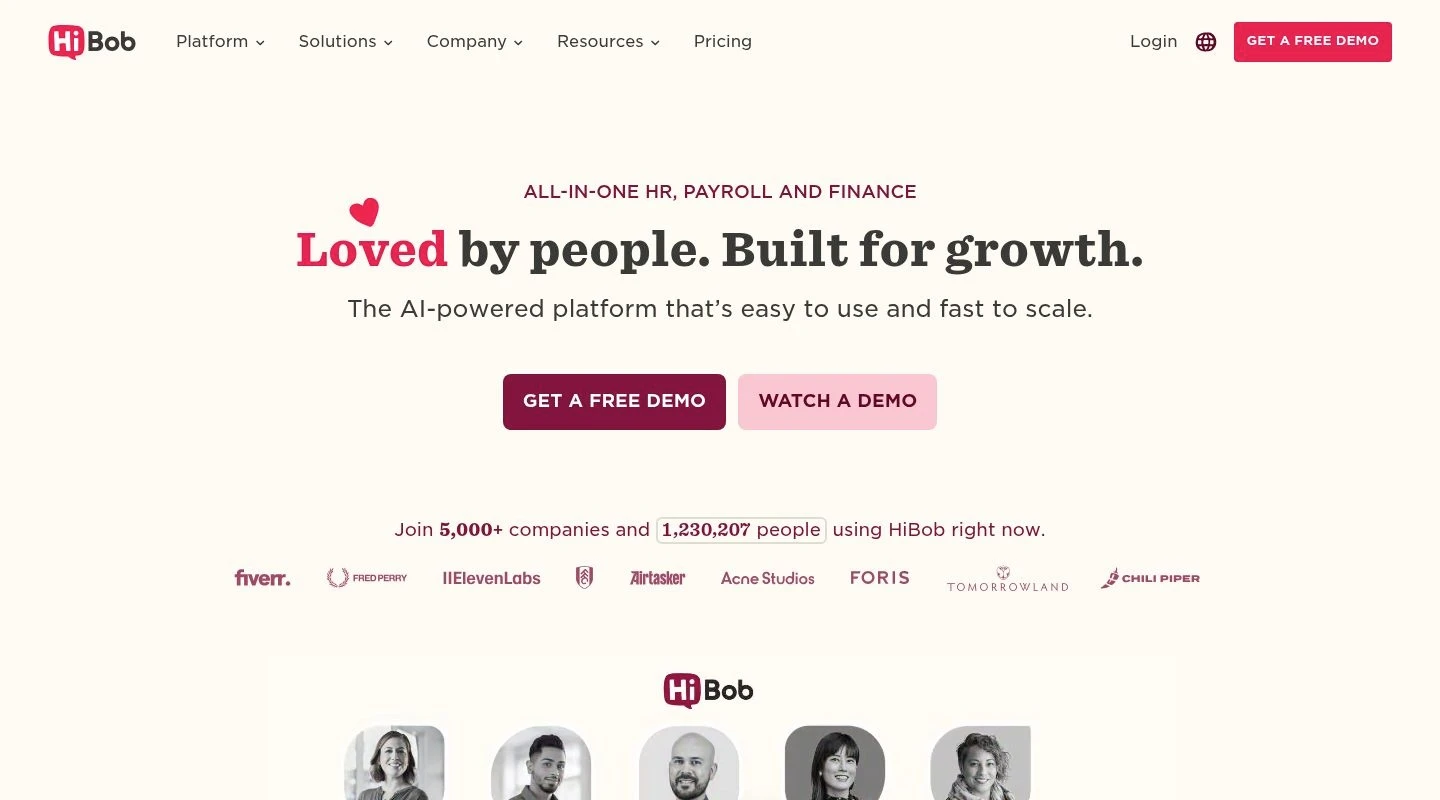
Bob earns the top spot because it ties performance, succession, and calibration to the same live people data that runs the rest of the organisation, so a UK enterprise develops its workforce on one system instead of stitching together a review tool, a succession deck, and a calibration spreadsheet. Built by HiBob on the required Bob Core foundation, the platform extends into a Talent suite that treats people development as a connected process rather than an annual event.
The standout for enterprise buyers is how the Talent suite handles the work that fragments at scale. Performance reviews run as 360-degree cycles with customisable templates and AI-drafted summaries, and the ratings feed straight into calibration. Calibration events use a drag-and-drop 9-box grid, so leaders compare talent side by side and settle ratings in a live session rather than reconciling versions of a sheet afterwards. Succession planning sits on the same data, which lets HR flag high-potential employees and map successors for critical roles without exporting anything.
The platform fits fast-moving and multinational employers in technology, media, and professional services, with names such as Fiverr, VaynerMedia, and Salesloft on the customer roster. It hands enterprise HR the kind of talent depth most often reserved for heavyweight suites, wrapped in an interface that managers and staff pick up in a sitting.
Key features
- Talent suite with 360-degree performance reviews, customisable templates, smart nudges, and AI-generated review summaries
- Calibration events run on a drag-and-drop 9-box grid for live, side-by-side talent comparison
- Succession planning that identifies high-potential talent and maps successors for critical roles on the same people data
- Goal setting and tracking at adjustable levels, connected to review cycles, plus structured 1-on-1s
- Bob Core base layer holding one people record, role-aware self-service, and starter-mover-leaver processes that log an audit-ready history
Pros
- The talent layer (reviews, succession, and 9-box calibration) shares Bob’s central record, so people decisions draw on current data instead of a pile of exports
- The calibration grid lets a leadership group land ratings inside one live session, sparing HR the version-merging that drags out enterprise review rounds
- Typical go-lives land in weeks, not the long quarters a legacy suite asks for, which keeps the rollout’s change-management burden small
Cons
- The vendor publishes no rates, so an enterprise has to run a demo and a sales cycle before it can size total cost
- Built-in payroll spans the UK and US only; elsewhere, teams wire in their current provider through the Payroll Hub rather than running pay on one native engine
Pricing
HiBob doesn’t publish list pricing. The platform sells on a modular basis: every customer starts with Bob Core, then adds the Talent, Payroll, or HR Planning suites as needed, and buying a full suite costs less than the individual modules. Enterprise quotes come through a demo and sales conversation, so plan to share headcount and suite requirements to get a figure.
2. Workday
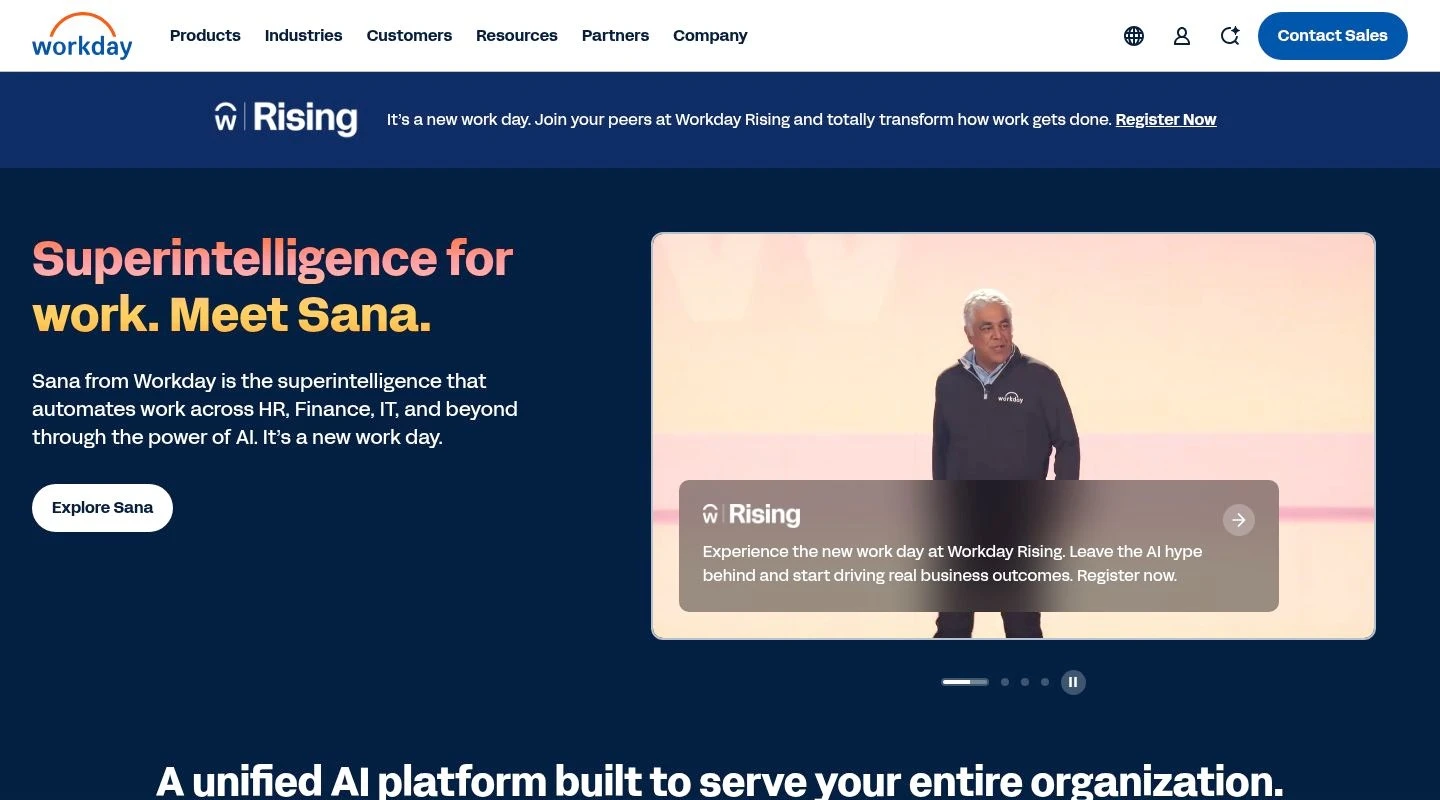
Workday runs on a cloud-born architecture that keeps HR, payroll, talent, planning, and finance on one shared record. Analysts list it among the go-to choices for the world’s biggest employers, and its sweet spot is the boardroom, where people and finance figures need to line up for executive calls. On the talent side it brings skills mapping, succession, and engagement under the same roof.
The platform leans toward employers north of a thousand staff running tangled global structures who want HR and finance reading from one ledger. The capability is genuine; so is what it asks of the buyer.
Key features
- One shared record across HR, payroll, talent, workforce planning, and finance
- Talent tooling from hiring through review cycles and succession
- Skills cloud, engagement pulses, and generative AI helpers
Pros
- Because HR, finance, and operations sit on one record, the cross-functional analytics that big employers lean on hold together without stitching
- Buyers who have lived through several suites tend to crown it the most thorough at folding almost every HR function into one place
Cons
- On G2, users call it intricate and say it expects real fluency from everyone who touches it, on top of a heavy lift to embed it
- Pricing sits near the ceiling of the category, and reviewers describe a rollout that is anything but quick, which rules it out under about a thousand staff
Pricing
Workday prices by negotiated enterprise contract and doesn’t publish rates. Expect costs at the top of the market, with implementation and the internal team needed to run the platform adding a large sum to the licence fee.
3. ADP Workforce Now
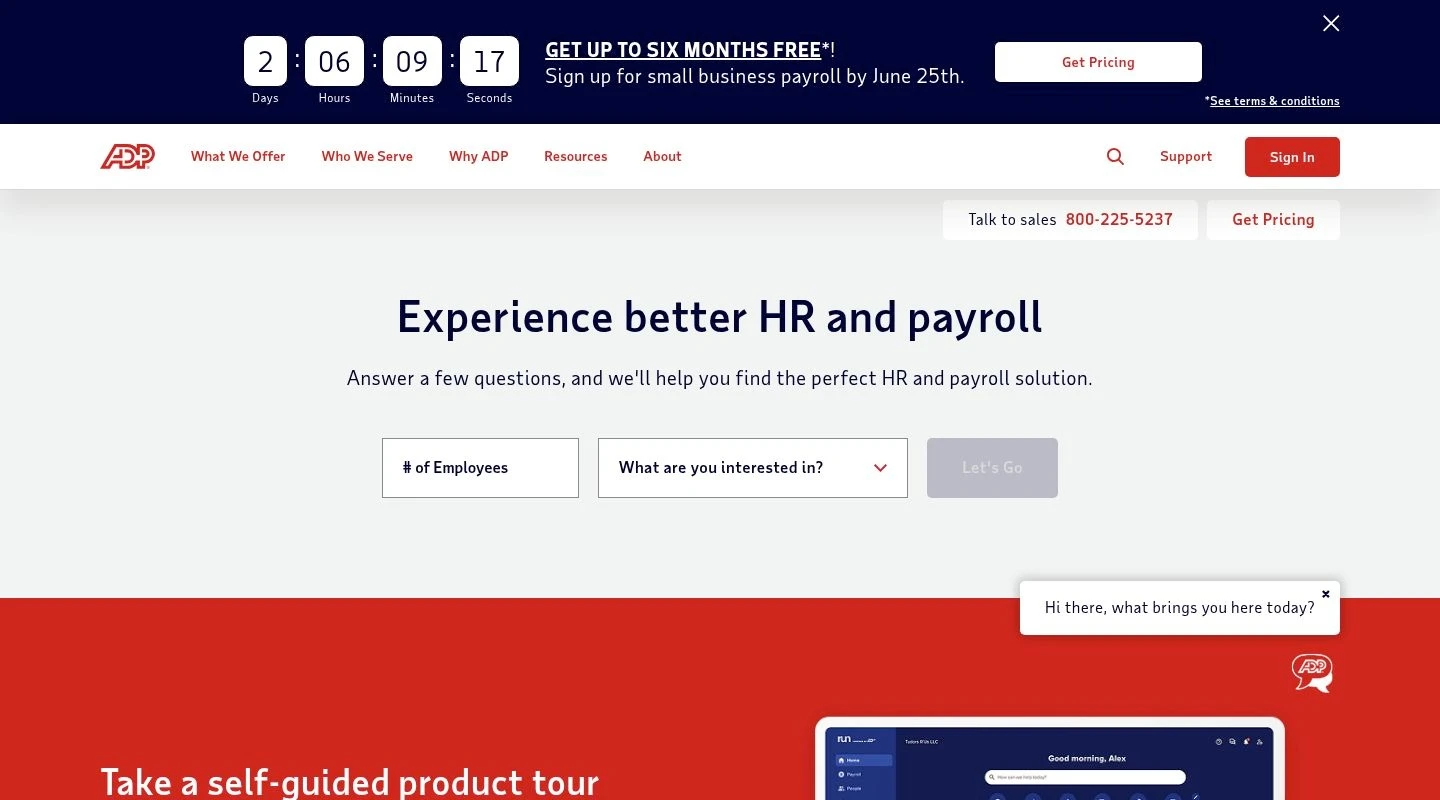
ADP Workforce Now grew out of decades in payroll and one of the deepest workforce datasets anyone holds. The cloud platform pulls payroll, HR, benefits, time, and a talent set into one place, with compliance know-how that spans jurisdictions. Performance and learning ride alongside the payroll engine that made ADP’s name.
The system courts mid-market and larger employers across most sectors, landing best where knotty payroll and cross-border compliance steer the choice.
Key features
- Automated payroll with anomaly detection, tax filing, and compliance tooling
- Benefits administration, time and attendance, plus a talent set covering hiring, reviews, and learning
Pros
- Payroll and compliance heritage, backed by an enormous benchmarking pool, pays off for employers juggling several jurisdictions
- The marketplace makes wiring Workforce Now into existing finance and benefits stacks a short job
Cons
- G2 users frequently knock the interface as dated and awkward, pointing to fiddly navigation and a report menu that confuses
- Reviewers report patchy support and a hard sell on add-ons, with talent pieces such as performance feeling rough next to the core payroll work
Pricing
ADP quotes per organisation and keeps figures off the public page in most cases. Pricing scales with headcount and module selection, and buyers should account for add-on costs as talent and analytics needs grow.
4. UKG Pro
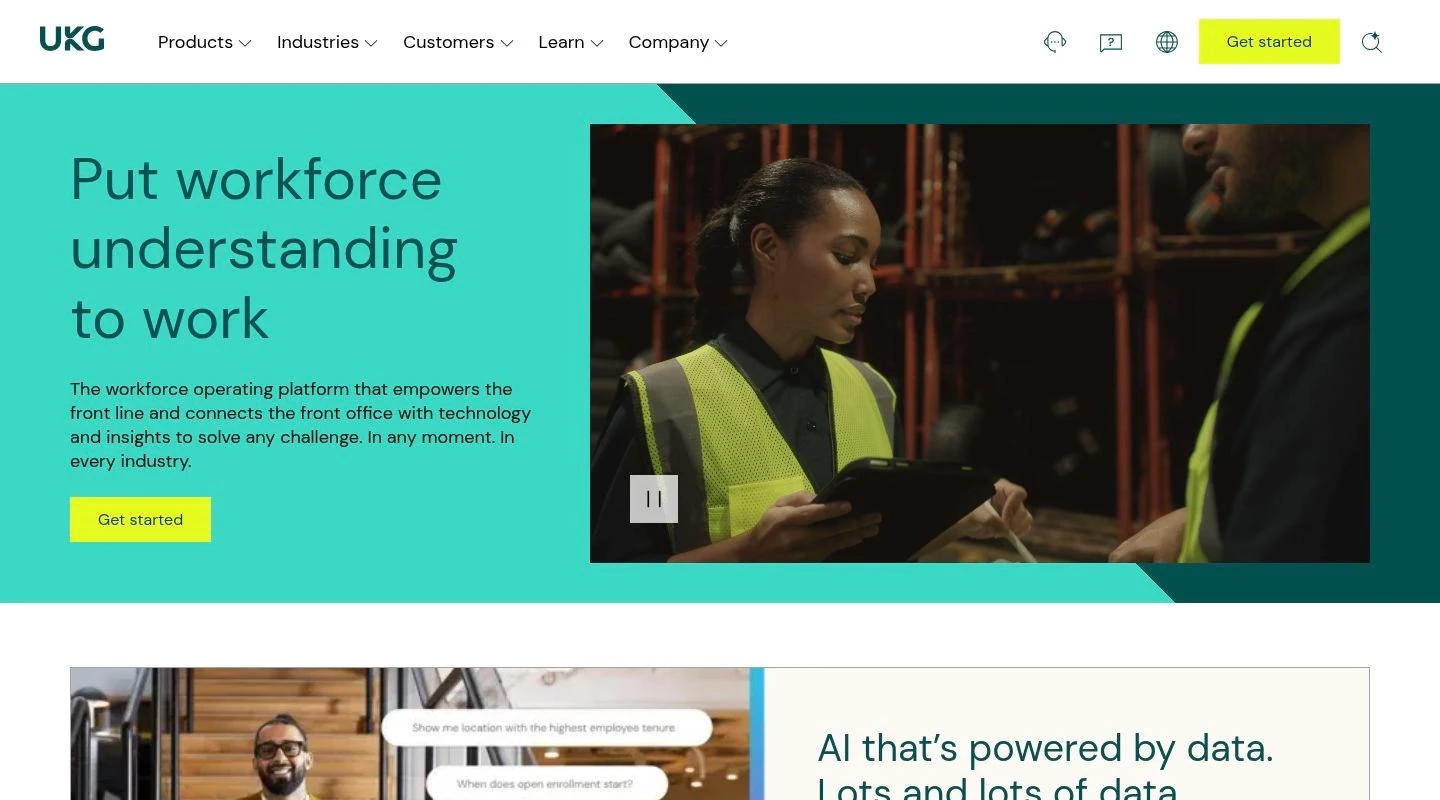
UKG Pro comes from Ultimate Kronos Group and leads with talent rather than payroll, drawing on long experience managing shift and hourly crews. It marries HR and a strong talent set to scheduling and time tracking, with a lively customer community behind it.
The product gravitates to mid-enterprise employers somewhere between 350 and 10,000 staff in healthcare, financial services, manufacturing, retail, and hospitality, earning its keep where hourly workforces get complicated.
Key features
- Payroll and tax compliance paired with workforce management, scheduling, and time tracking
- Talent set from hiring through succession, plus engagement surveys read for sentiment
- People analytics and the UKG Community peer network
Pros
- Buyers who have cycled through several enterprise systems frequently name it the standout for talent depth and a partnership style of support
- The UKG Community adds peer learning and a support web that stretches past the usual vendor tie
Cons
- A share of reviewers find it overcomplicated, with adoption sagging once staff and managers are left to fend for themselves
- Users say support replies have slowed, and the Cognos-based reporting trips up HR staff without a technical bent unless they get training
Pricing
UKG Pro prices through enterprise quotes rather than published tiers. Cost reflects headcount, modules, and workforce-management complexity, so organisations with heavy scheduling needs should budget for the higher tier.
5. Rippling
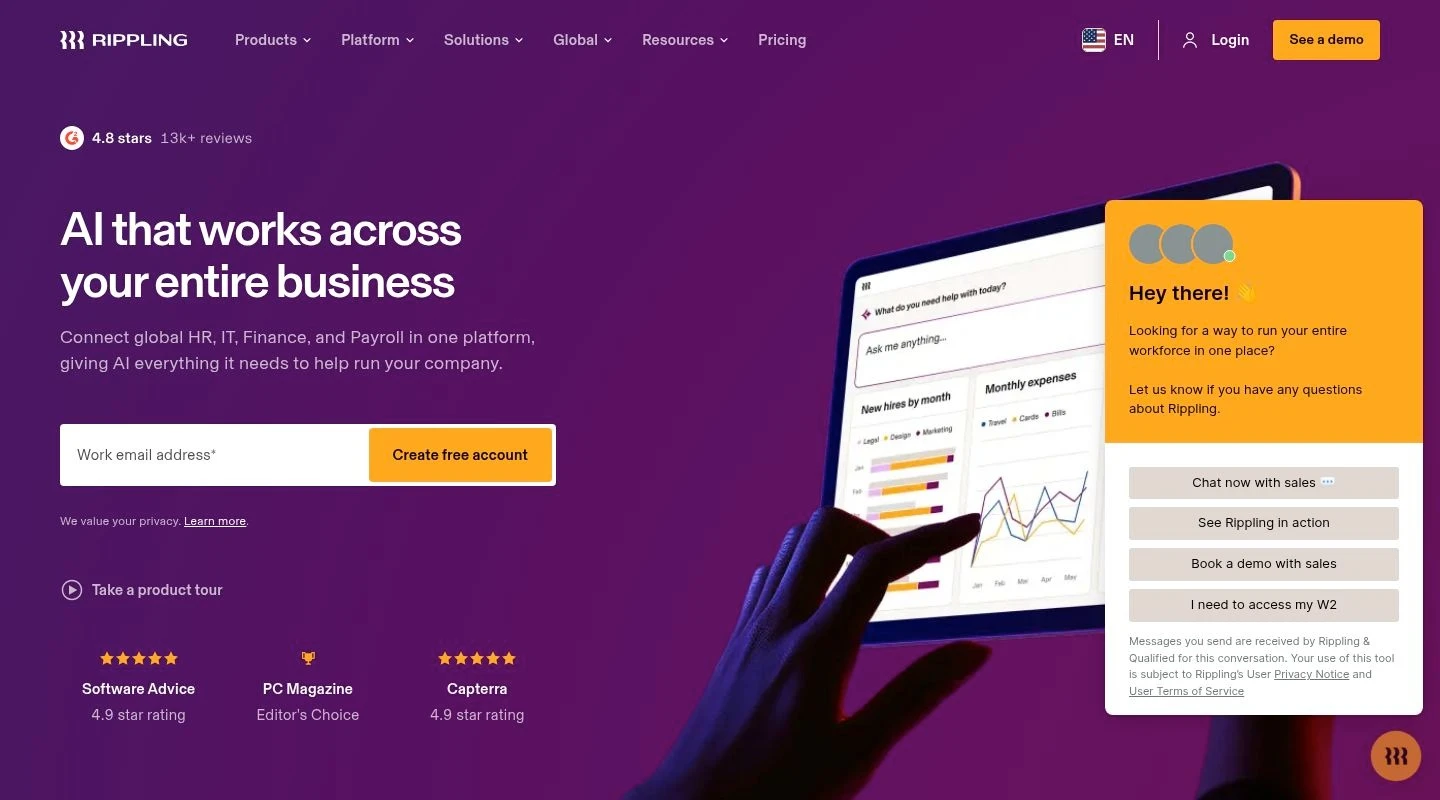
Rippling stitches HR, IT, and finance into one system and automates a new hire end to end, from payroll and benefits down to the laptop and the app logins. It has a name for a tidy interface and automation that reaches across departments, with performance management one of the pieces stacked on its HR base.
Rippling lands with smaller and mid-market employers in the 2 to 2,000 staff range, drawing in tech-leaning and distributed teams that want HR and IT marching together.
Key features
- Core HRIS with workflow automation and global payroll reaching many countries
- IT device and app provisioning hooked to the employee lifecycle
Pros
- Tying HR, IT, and finance together automates onboarding in a way few rivals touch, cutting out the IT handoff that stalls a first day
- Reviewers commend a clean, easy interface that still carries real feature breadth
Cons
- HR can read as the junior partner to the IT and provisioning core, which stings for enterprises that lead with people strategy over device control
- Users flag a sharp learning curve given the breadth, pricing that hides behind modules, and support that drags on thorny tickets
Pricing
Rippling prices per module on a per-employee basis and provides quotes rather than a public rate card. The modular structure means cost climbs as you add HR, IT, and finance products, so map the full bundle before comparing.
Why the number one choice stands out in 2026
HiBob earns the top position for 2026 by bringing together core HR, performance management, succession planning, and 9-box talent calibration within a single platform and shared data model. That means workforce decisions are based on the same employee information used across the rest of the organisation, reducing manual reconciliation and improving confidence in the data.
For UK organisations managing growth across multiple teams, entities, or countries, that connected approach can make a meaningful difference. Performance reviews, leadership planning, compensation discussions, and workforce reporting remain aligned, giving HR and business leaders a clearer view of talent across the company.
Frequently asked questions
How does enterprise HRIS software handle performance management at scale?
At enterprise scale, performance management has to run consistent review cycles across thousands of employees without losing the data behind each rating. The strongest systems use customisable templates, automated reminders, and AI-drafted summaries to keep cycles moving, then store every rating on the core people record. Bob, for example, runs 360-degree reviews whose outcomes feed straight into calibration and compensation, so a rating becomes a decision rather than a number trapped in a separate tool.
What is 9-box calibration and why does it matter for enterprises?
A 9-box grid plots employees on two axes, most often performance and potential, to compare talent side by side and settle ratings on a fair basis. Calibration matters at enterprise scale because one manager’s standards differ from the next, and a structured session corrects for that before pay and promotion decisions land. Bob runs calibration as a live event on a drag-and-drop 9-box grid, so leaders adjust placements together in one working session instead of reconciling competing spreadsheets afterwards.
How secure is enterprise HRIS software for UK organisations?
Enterprise HRIS security rests on role-based access, configurable approval routing, and audit-ready records of who changed what and when, all aligned to GDPR for UK organisations. Strong platforms restrict sensitive actions to controlled, reviewable paths and produce a clean export when internal audit or a regulator asks.
How long does it take to roll out an enterprise HRIS?
Go-live can take as little as a few weeks on a cloud-born core or stretch beyond a year on an older enterprise suite, and that spread accounts for most of the project risk. Headcount, the count of entities, the data you have to migrate, and the depth of configuration all bend the timeline.